

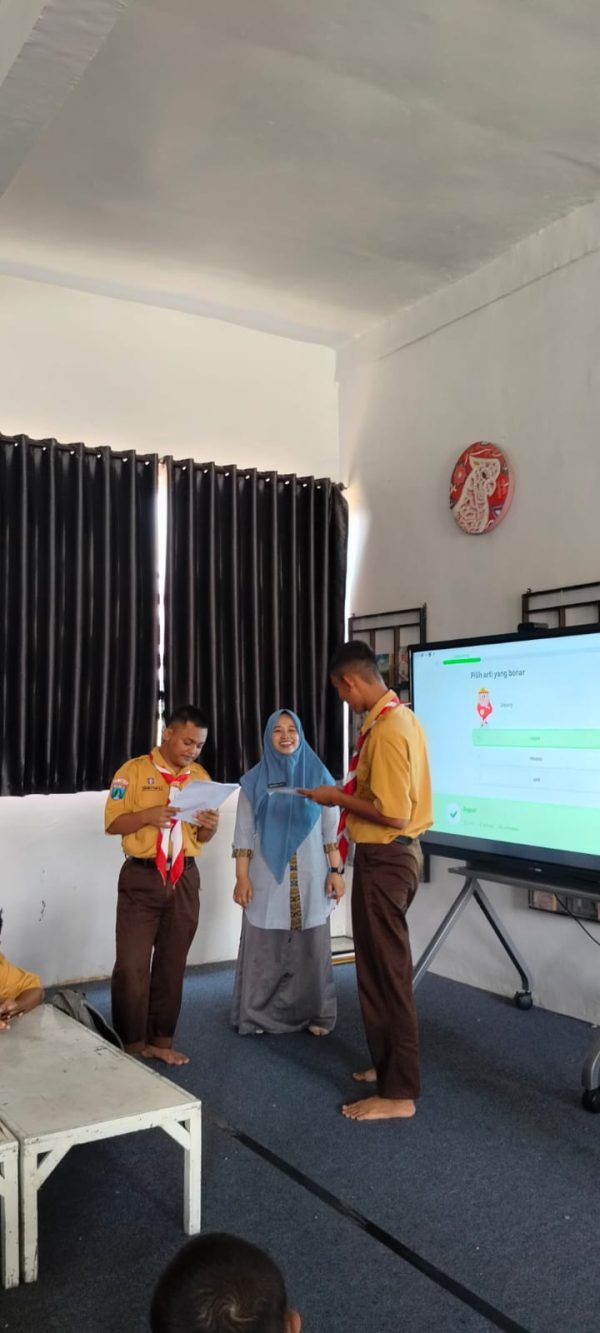
SMK GLOBAL — The English learning atmosphere in Grade XII at SMK GLOBAL was active, collaborative, and full of enthusiasm. Guided by Ms. Umi Nadiroh, students explored the topic of Narrative Text through Project-Based Learning (PJBL) with the Deep Learning – The Learning Quality approach.
The learning experience was designed around RRCS: The Learning Journey — Read, Reflect, Create, and Showcase. Through these stages, students were not only expected to understand the English material but were also given opportunities to think critically, create meaningful work, communicate their ideas, and demonstrate their learning. The learning process embraced the principle “Every Voice Matters,” emphasizing that every student has an opportunity to participate and express their ideas.

📒Read: Explore and Understand
The first stage was Read, focusing on exploring and understanding. At this stage, students used the Duolingo app to receive meaningful English input. They explored the learning materials, developed new vocabulary, gained new information, and built the knowledge they needed to understand Narrative Text.
This activity encouraged students to become active and independent learners. Rather than simply receiving information from the teacher, students were encouraged to explore, discover, and construct their understanding through digital learning experiences.
🧠Reflect: Think and Connect

The second stage was Reflect, focusing on thinking and connecting. By using the Wayground app, students processed the information they had gained through interactive questions and activities.
Students responded to questions, connected new information with their prior knowledge, and developed their own ideas. This reflection process helped students deepen their understanding of the material while strengthening their critical-thinking skills.
✏️Create: Produce and Communicate
After understanding and reflecting on the material, students moved to the Create stage, focusing on producing and communicating. Using Canva, students transformed their understanding into meaningful and creative products.
Students used English to create something meaningful and demonstrate what they had learned. This process provided opportunities to develop creativity, communication skills, collaboration, and confidence in using English.

📢Showcase: Share and Connect
The final stage was Showcase, focusing on sharing and connecting. Students presented and shared their work through TikTok, using the platform as a medium to communicate with an audience.
Through this activity, students learned how to communicate their ideas, receive feedback, appreciate one another’s work, and celebrate their learning achievements. The showcase stage also provided an authentic opportunity for students to use English beyond the classroom.
The learning of Narrative Text through Project-Based Learning, Deep Learning, and RRCS transformed the classroom into a more active, engaging, and meaningful learning environment. The teacher acted as a facilitator who guided the learning process, while students became active participants and took ownership of their learning journey.
The integration of digital applications—Duolingo, Wayground, Canva, and TikTok—was not merely about incorporating technology into the classroom. Each application served a meaningful purpose in supporting different stages of learning: understanding, reflecting, creating, and sharing.
Through this learning experience, Grade XII TSM students at SMK GLOBAL are expected not only to understand Narrative Text but also to develop relevant, creative, collaborative, and memorable learning experiences. Ultimately, learning English becomes more than simply learning a language. Students learn to use English to think, create, communicate, collaborate, and take an active role in their learning.
“Every Voice Matters.”
Every voice, idea, and creation has meaning in the students’ learning journey.
